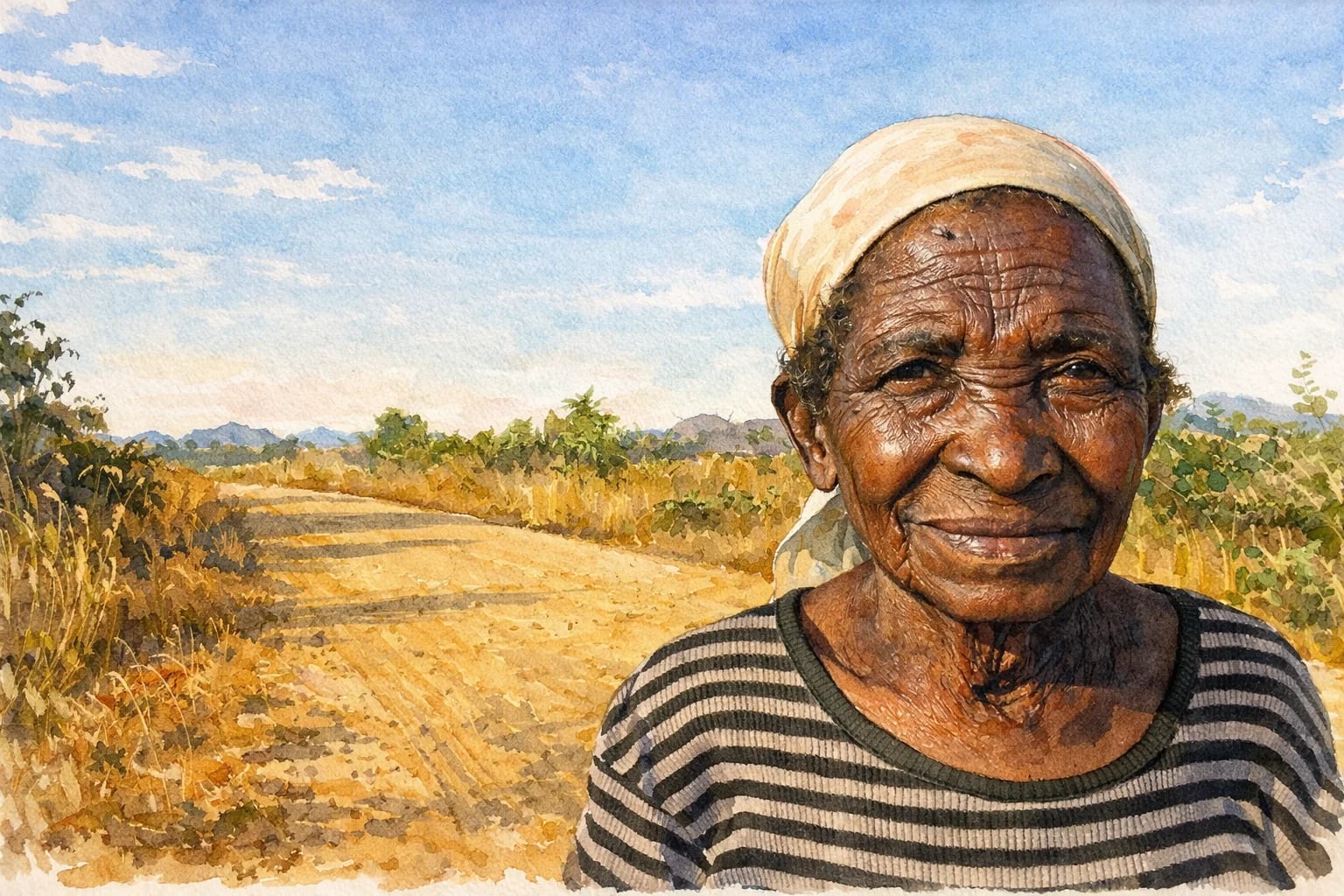
Community Participatory Analysis in Naviruli, Zambia
Understanding a Community & Its Challenges, From the People Most Impacted
Partners



As a Peace Corps volunteer, I was placed in Naviruli, Eastern Province, Zambia and paired with a community advocate. Over the course of 2.5 years, I worked directly alongside smallholder farmers learning their challenges, connecting them to resources, and facilitating participatory analysis to help the community drive its own development.
The Challenge
There's an estimated 1.6 million smallholder farmers (growing on less than 5 hectares of land) in Zambia. Their livelihood is incredibly challenging for reasons that are complex, interconnected, and often out of their control.
Most of these farmers operate within a traditional land tenure system. In this system, lands that are apportioned by traditional leaders are typically are not formally titled. This naturally leads to frequent land disputes over what land belongs to whom. And the ultimate result is a general lack of incentive for farmers to choose farming practices which build soil health and improve land quality. If they're land can be disputed in the future, why invest time and money into its enrichment.
There are many other factors at play as well. Inputs for farming are expensive but often necessary for farmers growing in depleted soils. Farming families rely on maize as the primary food staple, and, because of poor post-harvest storage solutions for their maize crop, farmers are often forced to sell to a flooded market. And flooded markets mean consistently mean low payouts for everyone.
Additionally, farm families primarily rely on family labor; events like illness and funerals can impact crop yields significantly. As a result, their labor supply, and likewise their food supply, is at frequent risk.
Compounding Factors
- Poor road infrastructure limits market access and increases transportation costs
- High prevalence of HIV and malaria impacts family labor and productivity
- Lack of viable credit options prevents investments in improved inputs or equipment
- High transport costs eat into already thin profit margins
- Few off-farm earning opportunities leave families vulnerable to crop failure
- Climate change brings increasingly unreliable rainfall and severe weather events
Farmers are utterly dependent on rainfall which is increasingly unreliable. Severe weather events — such as heavy rainfall that floods fields, or month-long droughts that destroy an entire crop — are becoming more common as a result of climate change.