Zambia National Conservation Compliance Assessment
Partners

Conservation Markets and the Compliance Gap
In Zambia's Luangwa Valley and the surrounding chiefdoms, farming communities and wildlife share the same land — and the same pressures. Deforestation driven by charcoal production and slash-and-burn agriculture, combined with persistent poaching, has steadily reduced forest cover and wildlife populations across Eastern Province.[2][3]
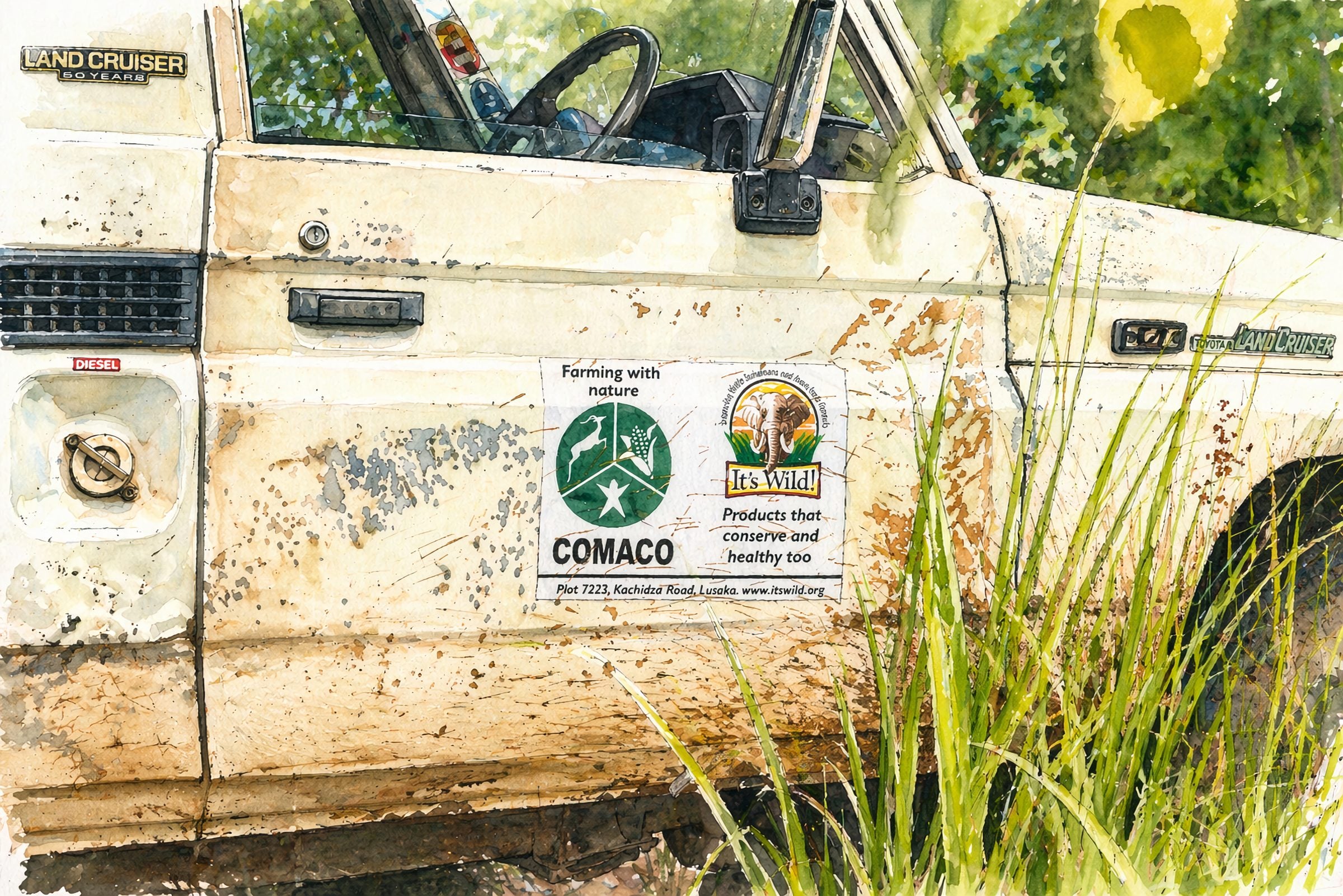
Community Markets for Conservation (COMACO) was built on a compelling premise: that farmers who adopt sustainable practices deserve better prices for their crops — and that connecting conservation behavior to market outcomes could succeed where enforcement alone had failed.[1] Through its It's Wild! product line, COMACO offers premium agricultural markets to farmer cooperatives that demonstrate verified conservation compliance. The model turns environmental stewardship into an economic advantage.
But a market-based conservation model depends on one critical input: an honest, methodologically sound assessment of which communities are actually conserving. Without it, the pricing signal that drives the entire system loses its legitimacy.
Conservation through markets only works if the market signal reflects real behavior on the ground.
Community Markets for Conservation (COMACO) is a Zambian nonprofit operating in the Luangwa Valley and surrounding districts. It works with tens of thousands of smallholder farmers, providing training in sustainable agriculture and access to premium markets through its It's Wild! brand. COMACO's model ties agricultural pricing to environmental compliance — rewarding communities that protect forests and wildlife with better income.